
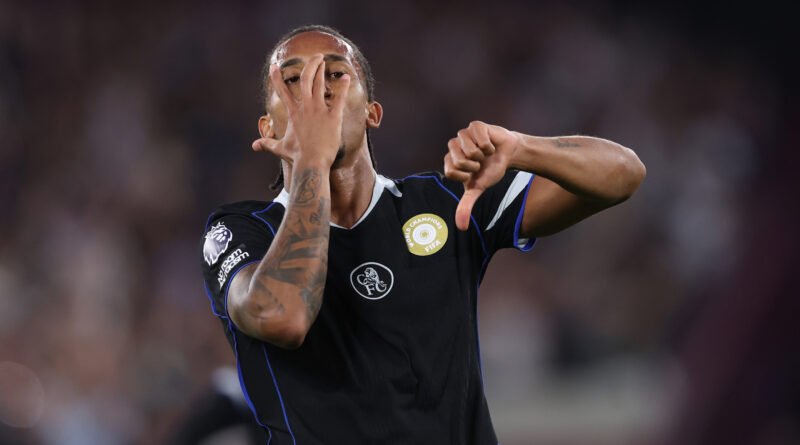
Why Joao Pedro’s injury has become a problem for Chelsea
Joao Pedro’s injury has exposed a problem for Chelsea that goes beyond losing one of their forwards.
The Brazil international has become one of the most important players in Xabi Alonso’s attack because of the number of things he does. He scores, creates, links midfield with attack, and brings other forwards into the game. Most importantly, Pedro gives Chelsea a reliable outlet when they need to keep possession in dangerous areas.
That combination is proving difficult to replace. Let’s talk about three areas Pedro’s absence has affected the two-time UEFA Champions League winners.
Joao Pedro’s goal contributions
This argument should be the most straightforward: Pedro produces goals.
During Chelsea’s first 10 games, the team recorded 16 goal involvements, with Pedro contributing eight of them through five goals and three assists. That means the Brazilian was directly responsible for half of Chelsea’s goal involvements during that period.
But his influence becomes even clearer when you look at what happened after he was removed from the team.
Chelsea averaged 11.5 chances per game during those first 10 matches. Without Pedro, that figure dropped to 8.75, a 24% decrease.
The decline in team goals has been even more dramatic. Chelsea scored 17 goals across the six league matches in which Pedro featured, compared with just two in the four league games without him.
That is not simply a striker disappearing from the scoresheet, it is an attack losing one of its central reference points.
Pedro does not need to be the player finishing every attack to influence the score. His movement, combinations and ability to participate in the build-up help Chelsea create the conditions for goals in the first place.
See how Chelsea played when they had to do without Pedro
His effect on the forwards around him
This might actually be the most important part of Pedro’s game, as his presence changes the roles of the players around him.
Take Cole Palmer.
Pedro can drop between the lines, receive the ball and connect midfield with attack. That means Palmer does not always have to come deep to find possession. Instead, he can remain closer to the areas where he is most dangerous.
The numbers show the difference.
Palmer created five big chances in six games alongside Pedro. Without him, that figure fell to just one big chance in four games. His overall output dropped too, from 36 Fantasy Premier League (FPL) points (6 per game) in six appearances alongside Pedro to 11 points (2.8 per game) in four appearances without him.
Palmer suddenly became a worse player, his circumstances simply changed.
Without Pedro, Palmer is often asked to take on more responsibility for creating attacks. He has to come deeper to collect the ball, which leaves him further away from the positions where he can hurt opponents.

The same principle applies to Pedro Neto and Morgan Rogers.
Pedro’s movement gives defenders another problem to worry about. When he drops deep, occupies a defender or pulls away from his position, he creates space for the other forwards to attack.
Remove him and those spaces become harder to find.
That is why replacing Pedro with another conventional striker may not solve Chelsea’s problem. They don’t just need somebody to occupy the number nine position. They need somebody who makes other players better.
His ability to retain the ball in the final third
This is perhaps the quality that receives the least attention. Pedro is not built like the traditional physical striker. He doesn’t have the imposing frame of Erling Haaland or Sunderland’s Brian Brobbey.
But that doesn’t mean he cannot handle physical defenders. He is very good at using his body to protect possession.
Chelsea’s system requires them to progress the ball quickly through different areas, and that becomes difficult when opponents defend compactly. Pedro gives them an escape route.
He can receive difficult passes under pressure, shield the ball, turn in tight spaces and bring teammates into play. Instead of the attack breaking down when a forward receives the ball with his back to goal, Pedro can keep the move alive.
That matters particularly against low blocks.
Chelsea may dominate possession but still struggle to create openings if they cannot keep the ball in dangerous areas. Pedro gives them someone capable of receiving possession between defenders, absorbing pressure and waiting for support to arrive.
Chelsea need to replace more than a striker
You could see the difference in Chelsea’s recent defeat to Sunderland.
Pedro’s absence was obvious because the alternatives offer different qualities. Pedro Neto can operate as a number nine but can struggle when opponents defend in a low block. Danny Welbeck provides experience, while Emmanuel Emegha offers another option once he is fully fit and integrated.
But none provides the complete package Pedro currently gives Chelsea. He contributes goals, creates for others, and gives Palmer, Rogers and Neto more freedom. He can drop into midfield, receive under pressure and retain possession in the final third.
That is why his injury has become such a problem, because Chelsea aren’t simply missing a striker. No, they are missing the player who helps connect almost every part of their attack.
LATEST POSTS
- Why Joao Pedro’s injury has become a problem for Chelsea
- Why Brajan Gruda, not Florian Wirtz, is Germany’s next big talent
- Joey Veerman is the spice Netherlands has needed for years
- Player Profile Analysis: Who is the ideal Premier League footballer? PART 2
- Player Profile Analysis: Who is the ideal Premier League footballer?