

Player Profile Analysis: Who is the ideal Premier League footballer? PART 2
We started the Premier League Player Profile Analysis last week, and I discussed the league, what made it unique, and what kind of players thrive there. We looked at centerbacks and central midfielders. In this piece, we’d look at strikers, and goalkeepers. Let’s jump straight into it.
Who is the ideal Premier League striker?
Many of you have been looking forward to this one, and I know why. Goalscoring is the most important part of the game. Coaches develop tactics either to increase the production of them or sharpen their prevention.
The question is simple: which striker should I buy if I need goals? That’s why we’re here.
Which striker should I buy when I need goals?
There are three things to consider: big chances received, big chances converted and shots taken. Let’s start with big chances received.
This has something to do with tactical style, but established strikers usually maintain relatively consistent numbers regardless of the tactical system.
You need a striker who is good at getting into very good shooting positions. The ideal striker averages between 0.8 and 1.3 big chances per 90, regardless of whether they are scoring them. The most important — and hardest — part of being a striker is consistently getting into good shooting positions.
Elite strikers average between 1.4 and 1.8 big chances per 90.
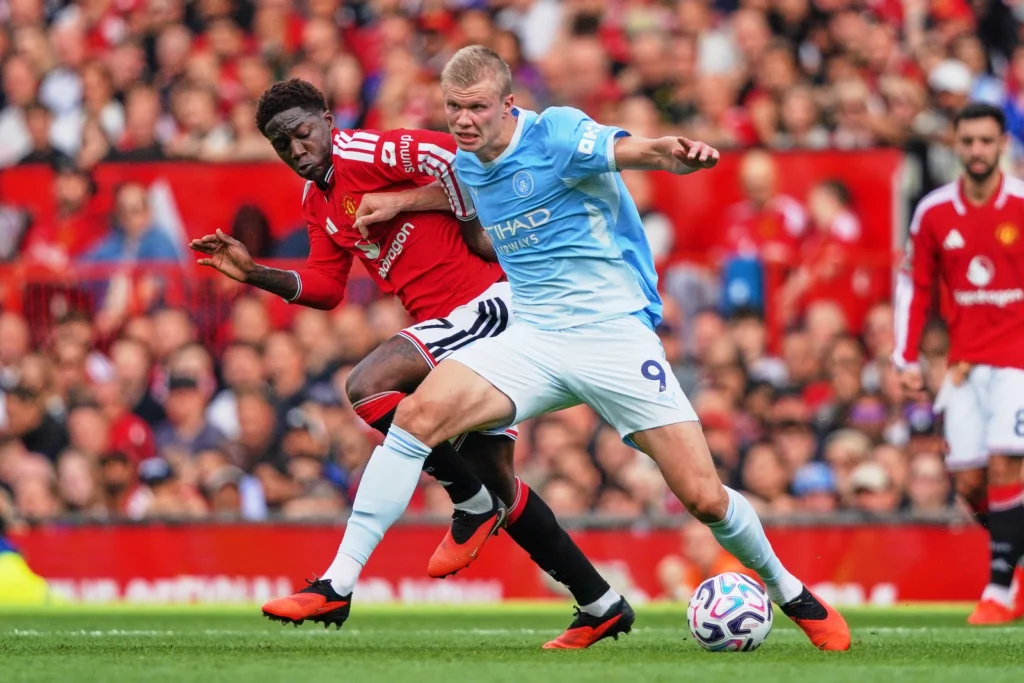
In fact, this is what makes Erling Haaland the best striker in the game. In the 2022/23 league season, the Norwegian received 59 big chances, or roughly 1.7 big chances per game.
The next thing is finishing. The majority of a striker’s goals will come from big chances. This means a striker who can’t finish will struggle to consistently put up 15 to 20 goals every season.
The ideal striker needs to finish 35% to 48% of his big chances. 50% and above puts you in the elite tier, as big chances are still difficult to finish, even though they are easier to convert than non-big chances.
The last thing to look at in a striker is the volume of shots he takes. All the best strikers also tend to lead in shot volume. Don’t try to score a large subset of fewer shots. You have a better chance of scoring a smaller subset of many shots.
In the Premier League, the ideal striker should average at least 2.4 to 3.4 shots per 90. Anything below that puts you in the lower tier, while anything above that puts you in the elite tier. I mention shot volume last because it is the metric that has as much to do with tactical style as it does with the player’s skill.
To be a prolific striker in the English top flight, your most important asset is your ability to get many big chances under your belt. That way, you can finish just 40% to 42% of them and still score plenty of goals.
This has been the story of many great strikers, in the Premier League and beyond.
Who is the ideal Premier League goalkeeper?
This one is tricky because, while we need to consider two areas, one is only relevant if they pass the other. The two areas are save percentage and goals prevented. However, goals prevented are only worth looking at if the save percentage is up to par.
What is par? 70%. In this league, a goalkeeper averaging a 70% save rate can be a long-term keeper for any side. Seventy per cent is the ideal, although it can obviously be higher.
Anything below this puts the goalkeeper’s ability into question.
The second metric is goals prevented. This refers to the number of goals a goalkeeper allows, compared with what they were supposed to allow, based on the xG value of a shot after a player has shot it.
The ideal goalkeeper should fall into the 0 to 3.5 range for this, but that is only valuable if they are saving at least 70% of their shots.
Why do players flop in the Premier League?
The answer is shorter than you think, and often has very little to do with quality.
The Premier League is the most-watched league in the world, so there are naturally billions of eyes on its players. Fans often give players single-digit numbers of games to prove themselves.
When fans don’t “see the hype”, they conclude that the player cannot cut it in this league and write him off. In reality, several factors contribute to a player’s success. I’ll discuss only one because it is arguably the single biggest factor.
One major reason for a player’s success or failure is tactical fit. Too many times, clubs buy players to play roles they cannot play.
For example, Chelsea fans grew frustrated with former Manchester City forward Raheem Sterling, and some of the complaints included his lack of chance creation and inability to produce the kind of scoring numbers he did at Manchester City.

A closer look shows that the now-31-year-old has never been a creator, and you can trace his goal numbers at Manchester City to the quality of the team he played for.
When Chelsea signed him, it seems the club did not account for any of that. He was simply expected to replicate the same level of influence. That is just one example.
Understanding a player’s fit within a tactical style will inform how that player is used. And how the coach uses the player plays a key role in how well they perform.
This was a long read, but at least now you know what to look for when Fabrizio Romano next links your club to the hottest player from Brazil, Spain, Italy or wherever your club goes to buy its next bright young star.
*A big chance is a shot or chance that has an expected goals (xG) value of 0.25 or higher.
