
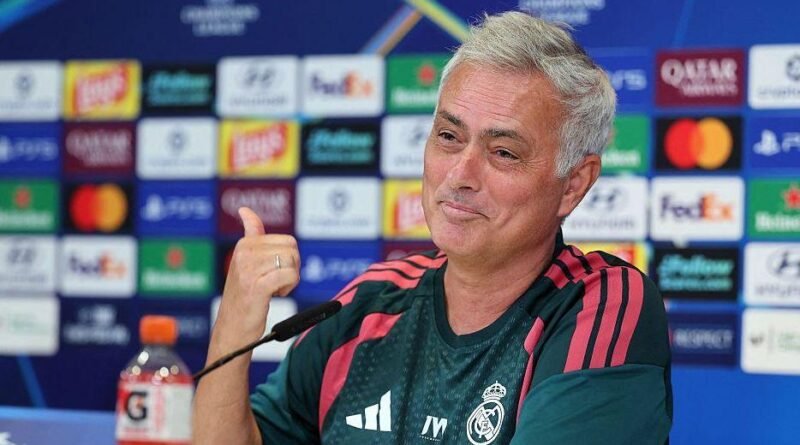
Barcelona 1-2 Real Madrid: 5 players who defined El-Clásico
El Clásico is rarely just another football match. It is a fixture where individual performances can become defining moments, where one mistake can undo an otherwise impressive display, and where the result often matters just as much as the manner in which it is achieved. The buildup to this game had hit a fever pitch.
The rivalry between Barcelona and Real Madrid has produced countless memorable performances, but the latest meeting at the Spotify Camp Nou offered another reminder of how quickly the story of a game can change.
Real Madrid defeated Barcelona 2-1 with Kylian Mbappé scoring twice to secure a significant away victory. Raphinha briefly brought Barcelona level in the second half, but Eduardo Camavinga’s contribution to Mbappé’s late winner ensured that the visitors left with all three points.
The scoreline tells us who won. The performances behind it tell us how. Here are five players who defined this edition of El Clásico.
There are matches in which a striker can play below his best and still emerge as the most important player on the pitch. Mbappé’s performance against Barcelona was a reminder of why forwards are often judged by what they do in decisive moments.
1. Kylian Mbappé
His opening goal was hardly a masterpiece. Madrid had worked the ball into a promising position, but the finish came about through an unfortunate deflection off Gerard Martín. Mbappé was in the right place, and the ball ended up in the net. He will hardly complain about the manner in which it went in.
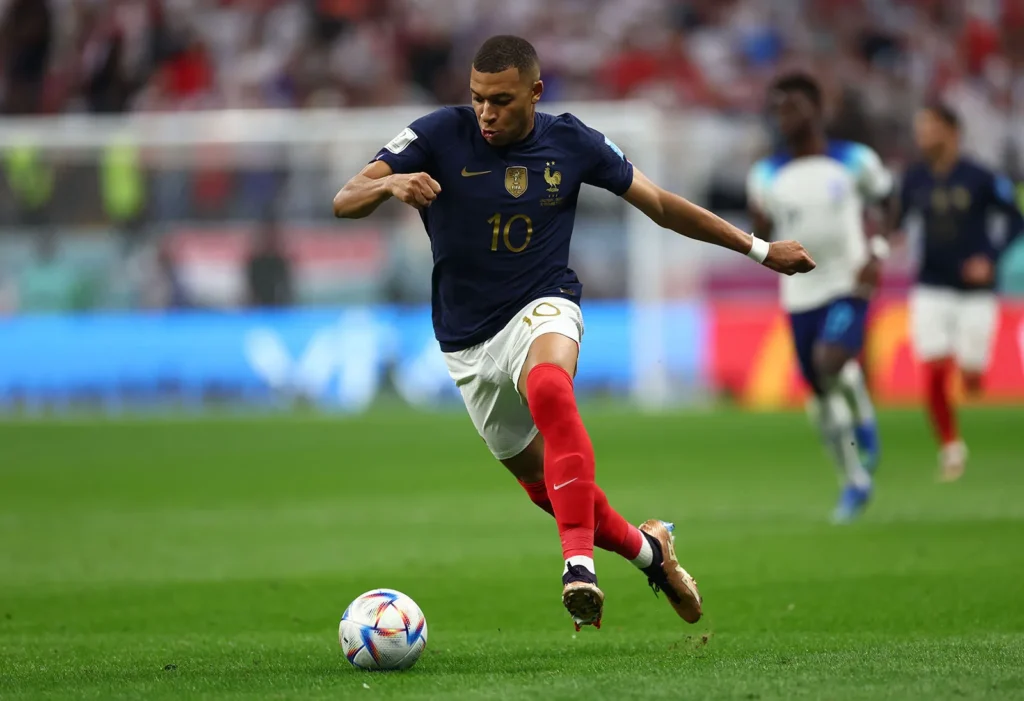
His second goal was a different story. With the match finely balanced and Barcelona pushing for a winner of their own, Mbappé showed the composure required to finish a move that had been built on excellent individual work from his teammates. Camavinga’s pass found him in the box, and he made no mistake.
2. Jude Bellingham
Bellingham did not score, and he did not provide the final assist for Madrid’s winner. Yet his contribution to the decisive goal deserves attention. When Madrid needed a moment of quality to turn a promising attack, Bellingham supplied it with a brilliant turn that helped him escape pressure and move the ball forward.
It was a small moment in isolation, but it changed the direction of the attack. He found Arda Güler, who helped progress the move before Camavinga delivered the decisive pass to Mbappé.
These are the contributions that can disappear when attention is focused exclusively on goals and assists. The final pass gets remembered, the finish gets replayed, and the player who helps create the opening can become an afterthought.
Bellingham’s role was a reminder that attacking moves are rarely the work of one player. Madrid’s winner required several players to make the right decisions in quick succession, and Bellingham’s intervention gave the move its momentum.
3. Eduardo Camavinga
Camavinga had only a short time to influence the match after coming on in the 80th minute. But seven minutes later, he had helped Madrid win it.
His contribution was not simply a matter of being in the right place at the right time. After Bellingham and Güler helped move the ball forward, Camavinga carried the attack into a dangerous position, got beyond Pau Cubarsí and picked out Mbappé for the finish.
The quality of the final pass mattered, but so did his decision-making. A less composed player might have rushed the opportunity or taken an unnecessary touch. Camavinga instead made the most of the space available and delivered a pass his teammate could convert.
His performance also highlighted the value of having players on the bench who can offer something different late in a game. As the match opened up, his ability to drive forward gave Madrid another way to threaten Barcelona.
4. Raphinha
Barcelona needed someone to turn their improved second-half performance into a tangible reward, and Raphinha delivered, as he has consistently done this season.
His equaliser in the 61st minute came after a clever pass from Pedri, with the Brazil international taking his opportunity to beat Andriy Lunin.
Raphinha’s importance extended beyond the finish itself. Barcelona needed a response after a first half in which Madrid had looked more comfortable defending and attacking in transition. His goal gave the hosts renewed momentum and changed the atmosphere around the match.
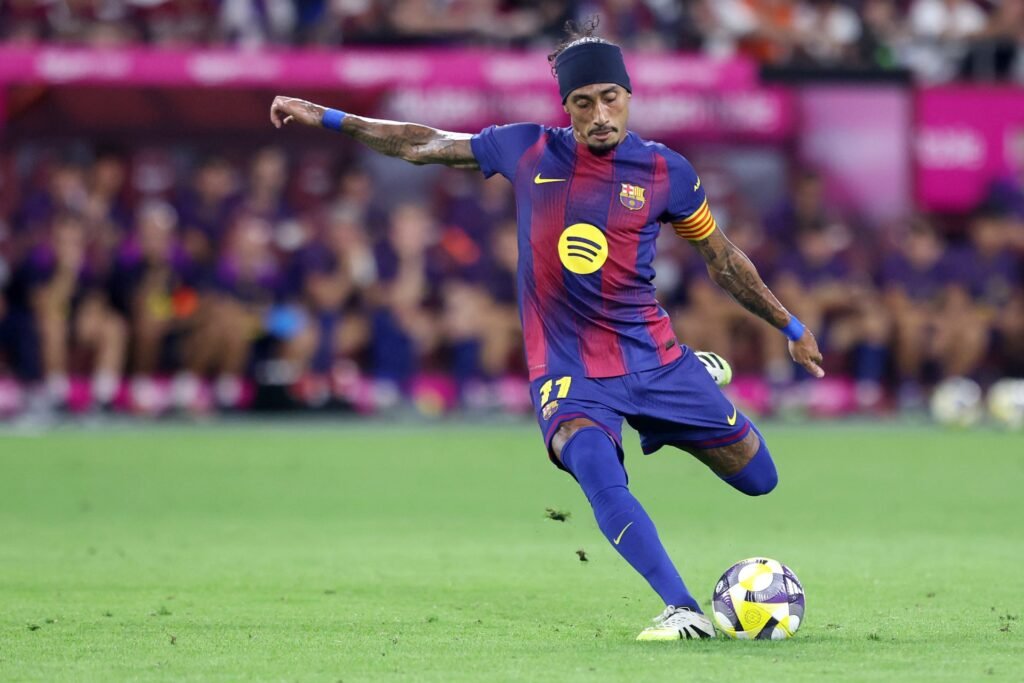
It also demonstrated why Barcelona cannot afford to overlook his contribution when assessing their attacking options. His willingness to attack spaces and take responsibility in decisive moments gives the team a different dimension.
There is, of course, a limit to what one goal can achieve. Barcelona could not turn their equaliser into a winning goal, and Madrid eventually punished them at the other end.
5. Andriy Lunin
A goalkeeper can spend much of a match watching his teammates attempt to control proceedings before suddenly becoming the most important player on the pitch.
Lunin had to be ready when Barcelona threatened, and one of his most significant contributions came in the 66th minute. With the score level, Gerard Martín met a corner with a powerful header that should have given Barcelona the lead. Lunin produced an excellent save to keep the attempt out.
That intervention mattered because the match was still delicately poised. Had Barcelona scored, Madrid would have faced a very different challenge in the closing stages. Instead, Lunin kept the score level and gave his teammates the opportunity to find a winner of their own.
Each player influenced the match in a different way, but their contributions point to the same conclusion: individual brilliance matters most when it serves a team’s larger objective.
Barcelona had their moments and showed enough after the break to make the contest competitive. Madrid, however, were more decisive when the opportunities arrived.
The La Liga title race is now wide open, with Real Madrid just three points behind the league leaders. This win gives Jose Mourinho’s side an advantage if it comes down to head-to-head. Of course, the world is not ending for Barcelona, but this loss exposed a part of their game that has been showing for weeks. A question Barcelona fans will ask is: how does the team win games when the attack is not firing?