
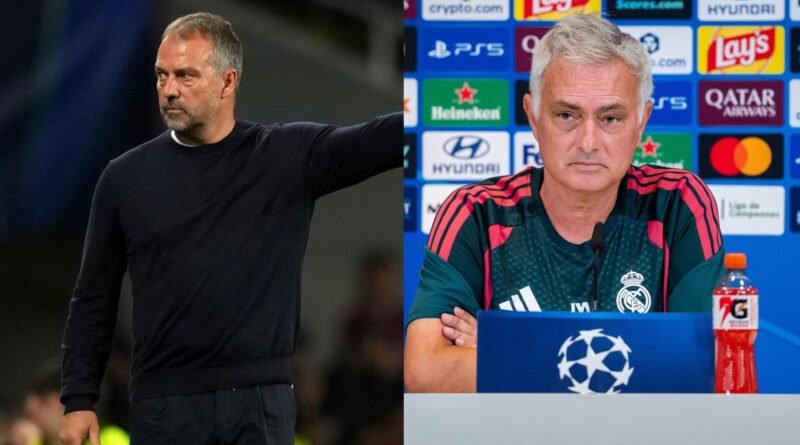
Tactical Analysis: Why Barcelona and Real Madrid face two different problems
Barcelona and Real Madrid began the LaLiga season with similar ambitions, but seven games in, the two sides are attracting very different questions.
Barcelona look capable of scoring against anyone. Real Madrid have comparable attacking talent, yet they have not always controlled matches or converted their opportunities efficiently.
That contrast has sharpened over the last two weeks. Barcelona maintained their perfect start with wins over Racing Santander and Sevilla, scoring 10 goals across the two matches. Real Madrid, meanwhile, followed a late 3-2 victory over Elche with a 2-1 defeat to Atlético Madrid in the derby. They are now six points behind Barcelona, having won five and lost two.
Are you a football writer looking for a platform that will push you and help you grow? You can become a writer for The Ddraft. We know how hard it is for you to get your writer career off the ground. We’re here for you. Send an email to theddraftofficial@gmail.com
Both teams possess considerable attacking quality. Their problems, however, are different: Madrid need to turn their threat into more decisive and consistent production, while Barcelona need to make their attacking dominance defensively sustainable.
Real Madrid have the threats. But they need the finishing
Real Madrid do not necessarily need more attacking options. They already have Kylian Mbappé, Vinícius Júnior and Jude Bellingham. Arda Güler is becoming increasingly influential, while Carlos Espí has already produced two late winners this season.
The issue is that Madrid are creating chances without consistently making them count. Against Elche, they led 2-0 by the 33rd minute. Güler opened the scoring with a free-kick that went in off goalkeeper Matías Dituro, and Mbappé doubled the advantage eight minutes later. Madrid were in control and had opportunities to extend their lead.
Instead, Elche came back. Abiel Osorio pulled one back in the 71st minute, Fer Niño equalised 12 minutes later, and Madrid were back to chasing a match they should have long put to bed. Espí eventually scored in the 91st minute to rescue the points.
It was a memorable moment for the young striker, but it also exposed a weakness: Madrid cannot rely on late substitutes to solve every week. The Madrid derby showed exactly what happens when that rescue does not come.
Güler is part of the solution
Güler is central to Madrid’s response because the Turkiye midfielder is becoming one of their most important creative players. His performance against Elche illustrated that development. He scored the opener, created opportunities, and played Vinícius through for an excellent chance that went wide. Recent statistics also show he has created more big chances than any other Madrid player this season.

Madrid need more of that. They do not lack players who can threaten an opposition defence. Mbappé can frighten defenders with his runs in behind, Vinícius can create something from almost nothing, and Güler can find the pass that opens a defence.
The challenge is turning those situations into goals and control. If chances repeatedly go unfinished, Madrid can dominate stretches of matches without building the cushion their performances suggest they could have.
Against Atlético, Madrid managed just 0.32 expected goals, their lowest total in a LaLiga match since 2015. Mbappé had only one shot, while Vinícius struggled to influence the game before being substituted.
Barcelona are spreading the goals around
Barcelona’s advantage isn’t only the quality of their attackers. It is the number of players contributing to the scoresheet.
Raphinha has been outstanding. Yamal continues to create and score. João Cancelo has already produced a brace. Gabriel Jesus has scored from the bench, while Karim Adeyemi has shown he can cause problems even without getting on the scoresheet.
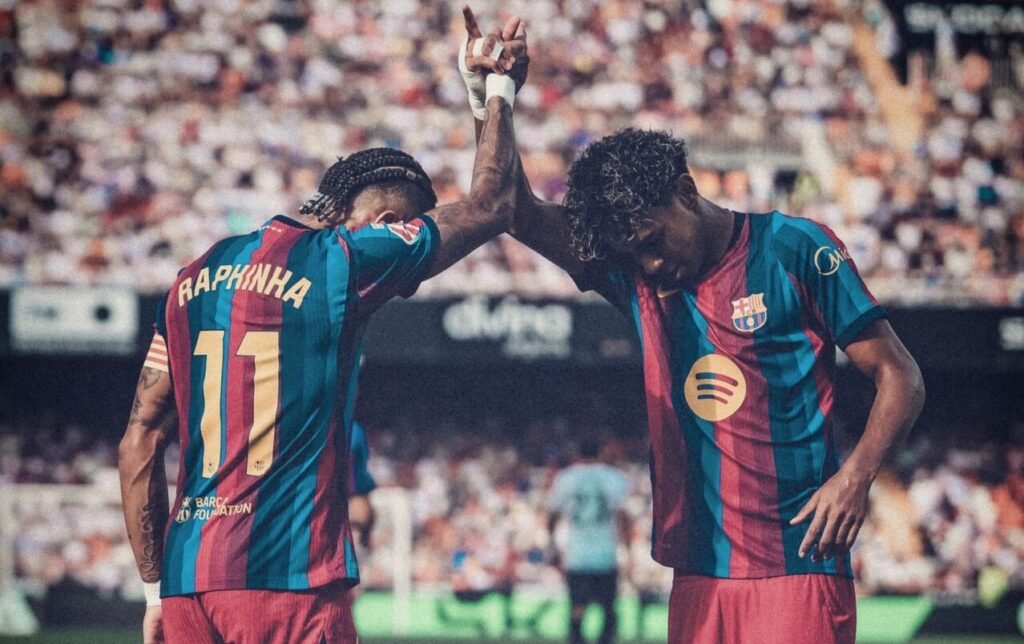
Barcelona scored seven goals against Racing, through five different players. Against Sevilla, Raphinha scored all three goals, and Yamal provided two assists. That gives opponents several problems to solve. Stopping Raphinha does not solve everything because Yamal can find space elsewhere, while closing down the wingers can open another route to goal.
Barcelona fell behind against Sevilla in the 19th minute and struggled to create during the first half, but they eventually took control after the break.
Barcelona are not without problems
Barcelona’s attacking numbers are spectacular, but their performances have not been flawless. They have conceded seven goals in seven league games, including three in their last two matches. Racing scored twice in the 7-2 defeat, while Sevilla took the lead before Barcelona turned the game around.
There were also defensive lapses in the previous 4-2 victory over Levante, when Barcelona all but lost a three-goal lead, needing to hold on to one goal, until a fourth put the game to bed late on.
That is the risk attached to their approach. Barcelona attack with numbers and intensity, which allows them to overwhelm opponents. But when that intensity drops, space can open for the opposition. Against more capable opponents, those moments could hurt much more
While Madrid are trying to make their attacking opportunities more decisive, Barcelona need to make their dominance more sustainable.
The season is still asking the same question
Seven games into the season, Barcelona are six points clear at the top of LaLiga with a 100% win record. Real Madrid are fourth with 15 points after losing twice.
Barcelona have looked unstoppable in some matches, careless defensively in others, and occasionally forced to come from behind. They have still won every game.
Madrid have also produced dominant performances, particularly at home, but their away matches have been more complicated. They needed late winners against Espanyol and Elche before losing at Betis and Atlético.
- Tactical Analysis: Why Barcelona and Real Madrid face two different problems
- Man City’s 115 charges scandal gives the Premier League a golden chance
- Is Lamine Yamal begging for the Ballon d’Or?
- Manchester City’s 115 charges: What does it mean for Manchester United?
- Player Analysis: The Florian Wirtz you want vs the one you have
Madrid therefore need more than greater clinical efficiency. They need to become more convincing when matches do not follow their preferred script. Barcelona, meanwhile, must ensure their attacking brilliance does not continue to conceal defensive vulnerabilities.
Neither team is close to being a finished product. For now, the two sides are simply dealing with different questions. And with the first Clásico of the 2026/2027 season coming on October 25, those questions could be different by the time the two teams share a pitch.